What happens when politicization replaces professionalism in the military?
Some authoritarians have learned the hard way
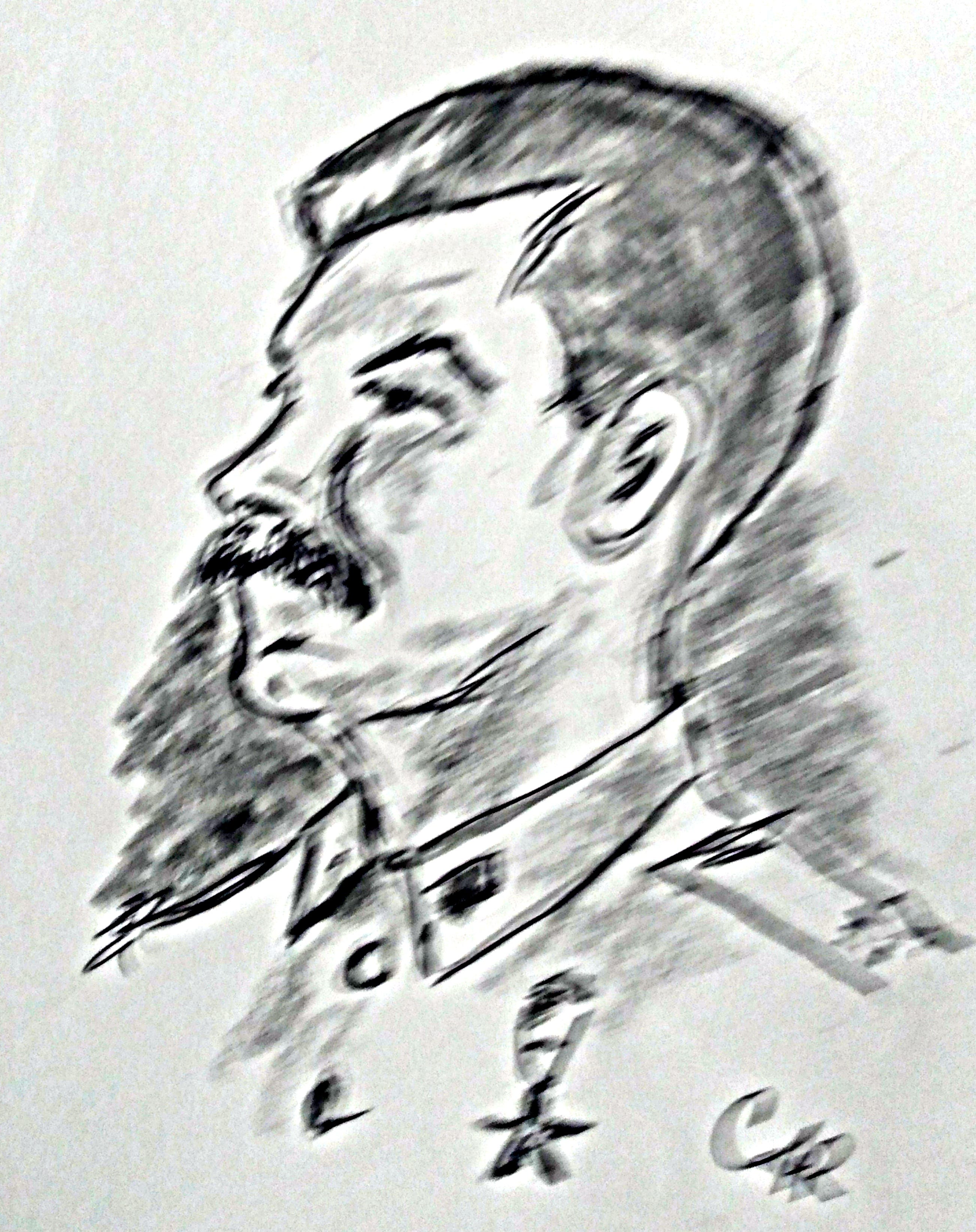
Joseph Stalin’s purge of the Red Army officer corps left it ill-prepared at the start of World War II. (art by Charles A. Ray)
Co-opting the military and security forces is one of the things all authoritarians do, sooner or later, as they consolidate their position of control. Professional, apolitical leaders are replaced by those loyal to el Jefe, and converted to a personal militia, prepared to do his bidding and conduct operations against targets of his (or her) choosing, foreign or domestic.
An extremely shortsighted act, co-opting the military for partisan purposes sacrifices professionalism and, eventually, its efficiency as a fighting force, and often sows the seeds of the authoritarian’s own destruction. When political loyalty becomes the primary criterion for advancement and command, the military’s core values, discipline, meritocracy, and institutional integrity are inevitably eroded. Officers and soldiers begin to prioritize allegiance to political figures over adherence to established codes of conduct and the broader national interest. This not only undermines morale within the ranks but also dilutes the sense of unity and shared mission, which are essential for operational effectiveness.
In a partisan force, critical decisions about strategy, logistics, and resource allocation are driven by political calculations rather than sound military judgment, leading to a decline in readiness and adaptability. Officers are more concerned with demonstrating their loyalty to the regime than with cultivating tactical efficiency, so training standards may be lowered, dissent suppressed, and honest assessments of weaknesses discouraged, contributing to a culture of mediocrity and complacency.
Over time, the military’s transformation into a partisan tool can have dire consequences for national security. Armed forces that lose professionalism are less capable of responding effectively to external threats or internal crises. This can lead to disaster on the battlefield, as history has repeatedly shown that politicized militaries often falter in the face of determined adversaries. In addition, the perception of the military as an extension of a ruling party or leader erodes public trust. It undermines the legitimacy of both the military and the government itself.
Ironically, the very process of consolidating power through the politicization of the military can plant the seeds of an authoritarian’s undoing. As professionalism wanes and the military’s loyalty shifts from the nation to an individual, factions may emerge within the ranks, each vying for influence or favor, creating opportunities for disaffected officers or rival elites to orchestrate coups or other forms of regime change, as happened with Robert Mugabe’s ZANU-PF military in Zimbabwe in 2017.
History offers numerous other examples in which the politicization of the military led to disastrous consequences for both the armed forces and the regimes that sought to control them. In Iraq under Saddam Hussein, purges and promotions based on loyalty rather than competence hollowed out the military’s professionalism, contributing to the rapid collapse during the US-led invasion in 2003. In Nazi Germany, Hitler’s interference in military strategy and his appointment of commanders based on political allegiance undermined the Wehrmacht’s effectiveness, most notably during the latter stages of World War II. Another example is the Soviet Union under Joseph Stalin, where the Great Purge decimated the Red Army’s officer corps, leaving it ill-prepared for the initial stages of World War II. More recently, the Libyan military under Muammar Gaddafi became deeply politicized and fragmented, leading eventually to its inability to defend the regime during the 2011 uprising.
The damage inflicted by politicizing the military can persist long after the authoritarian regime has been consigned to the dustbin of history. Rebuilding a depoliticized, professional, and trusted armed force is a complex and lengthy process. The legacy of favoritism, corruption, and mistrust will linger, complicating efforts to restore civilian oversight and democratic norms. While co-opting the military might offer short gains for the aspiring dictator, it ultimately weakens the very foundations of state power and stability.
In the end, sacrificing military professionalism for partisan advantage is not only a betrayal of the institution’s core mission but also a fatal flaw in any authoritarian’s strategy for enduring control.
Furthermore, the damage inflicted by politicizing the military can persist long after an authoritarian regime has fallen. Rebuilding a depoliticized, professional, and trusted armed force is a complex and lengthy process. The legacy of favoritism, corruption, and mistrust may linger, complicating efforts to restore civilian oversight and democratic norms. Thus, while co-opting the military might offer short-term gains for an aspiring autocrat, it ultimately weakens the very foundations of state power and stability. In the end, sacrificing military professionalism for partisan advantage is not only a betrayal of the institution’s core mission but also a fatal flaw in any authoritarian’s strategy for enduring control.